Your corporate relationships, reputation, and runway don't build themselves—here's what to secure before you announce anything
Welcome to The Table
I believe the right move at the right time can shift everything, often faster than years of waiting for the "perfect moment."
Today's Table talk? Your exit isn't just about leaving. It's about what you lock in before you announce anything.
Let's talk about the 90 days that determine everything that comes after.
Most people plan their resignation. Few people design their exit.
I've watched it happen too many times.
Someone decides they're done. They've hit their limit—the politics, the burnout, the misalignment between who they are and what they're being asked to do.
So they make the decision: I'm leaving.
And then? They start planning their resignation letter. Calculating their PTO payout. Updating their resume.
But they don't secure the relationships that will matter in six months.
- They don't document the wins that will become their case studies.
- They don't position themselves internally for the referrals and recommendations they'll need externally.
They plan their last day. But they don't design their launch.
And six months later, they're struggling to articulate their value, scrambling to rebuild credibility from scratch, and wondering why leaving felt harder than staying.
Here's what I learned the hard way:
The 90 days before you exit matter more than the 90 days after.
Because what you lock in during that window determines whether you leave with leverage—or just leave.
The three things most people forget to secure
When you're planning your exit, everyone focuses on the logistics. The notice period. The transition plan. The benefits paperwork.
But the professionals who exit well? They're focused on three things most people overlook:
- Relationships
Not your work friends. The people who can open doors, make introductions, and validate your expertise when you're no longer attached to a brand.
These relationships don't maintain themselves after you leave. You have to lock them in now. - Reputation
What you want to be known for doesn't matter if no one knows you did it. The 90 days before you exit is when you make your best work visible—not just to your manager, but to the people who will become your future clients, partners, and champions. - Runway
Financial peace isn't built in your last two weeks. It's built in the months before, when you're still collecting a paycheck and can strategically prepare for what's next, without panic driving every decision.
Most people think about these things after they leave. The ones who thrive think about them before.
My Story: How I turned my corporate scars into positioning power
When I left corporate, I didn't leave quietly. But I also didn't burn bridges.
I'd spent nearly a decade building, leading, and delivering results that mattered. I negotiated million-dollar logistics contracts during Covid—when supply chains were collapsing and everyone else was frozen. I knew how to perform under pressure, manage complexity, and deliver when it counted most.
And then at 43, I was laid off.
That could've been the end of the story. A setback. A bruise on my resume. Proof that even when you do everything right, the corporate game is rigged.
But I decided it would be something else: proof of a different kind.
- Proof that I knew how to navigate uncertainty.
- Proof that I understood what it felt like to have your identity tied to a title and then have to rebuild without it.
- Proof that I could turn adversity into advantage.
During those final 90 days before my official exit, I did three things:
I secured the relationships that mattered.
I reached out to the people who'd seen my best work—not to ask for anything, but to stay connected. I made sure they knew what I was moving toward, not just what I was leaving behind.
I documented everything.
Every project I'd led. Every transformation I'd managed. Every result I'd delivered. Not for my performance review. For my future clients. Those corporate wins—including those million-dollar negotiations—became my case studies.
I built my runway in silence.
I didn't announce my plans. I didn't post about my journey. I just quietly prepared—financially, strategically, emotionally—so that when I was ready to move, I could move with confidence, not desperation.
And here's what happened: the layoff that could've been a scar became my story. The adversity became my authority.
Because I didn't just leave. I designed my exit.
The 90-day lock-in checklist
If you're 90 days (or less) away from your exit—whether by choice or circumstance—here's what to prioritize:
Relationships: Who needs to know you before you go?
- Identify 10-15 people whose respect and network will matter after you leave
- Schedule coffee chats, exit conversations, or stay-connected check-ins
- Make sure they know what you're moving toward, not just what you're leaving
Reputation: What do you want to be known for?
- Document your wins with specifics (metrics, outcomes, transformations)
- Share your insights publicly (LinkedIn posts, internal presentations, thought leadership)
- Position yourself as someone who's transitioning strategically, not reactively
Runway: What gives you peace when you walk away?
- Build 6-12 months of operating capital if possible
- Identify your first potential clients or revenue streams before you announce
- Create financial clarity so your decisions aren't driven by panic
These aren't nice-to-haves. They're the difference between leaving with leverage and starting from scratch.
🔐Your exit is your launch
Most people miss this: Your exit isn't the end of your corporate chapter. It's the beginning of your entrepreneurial positioning.
How you leave determines what you take with you. And what you take with you determines how fast you build what's next.
You don't get a second chance to design your departure. But you do get 90 days to lock in everything that matters.
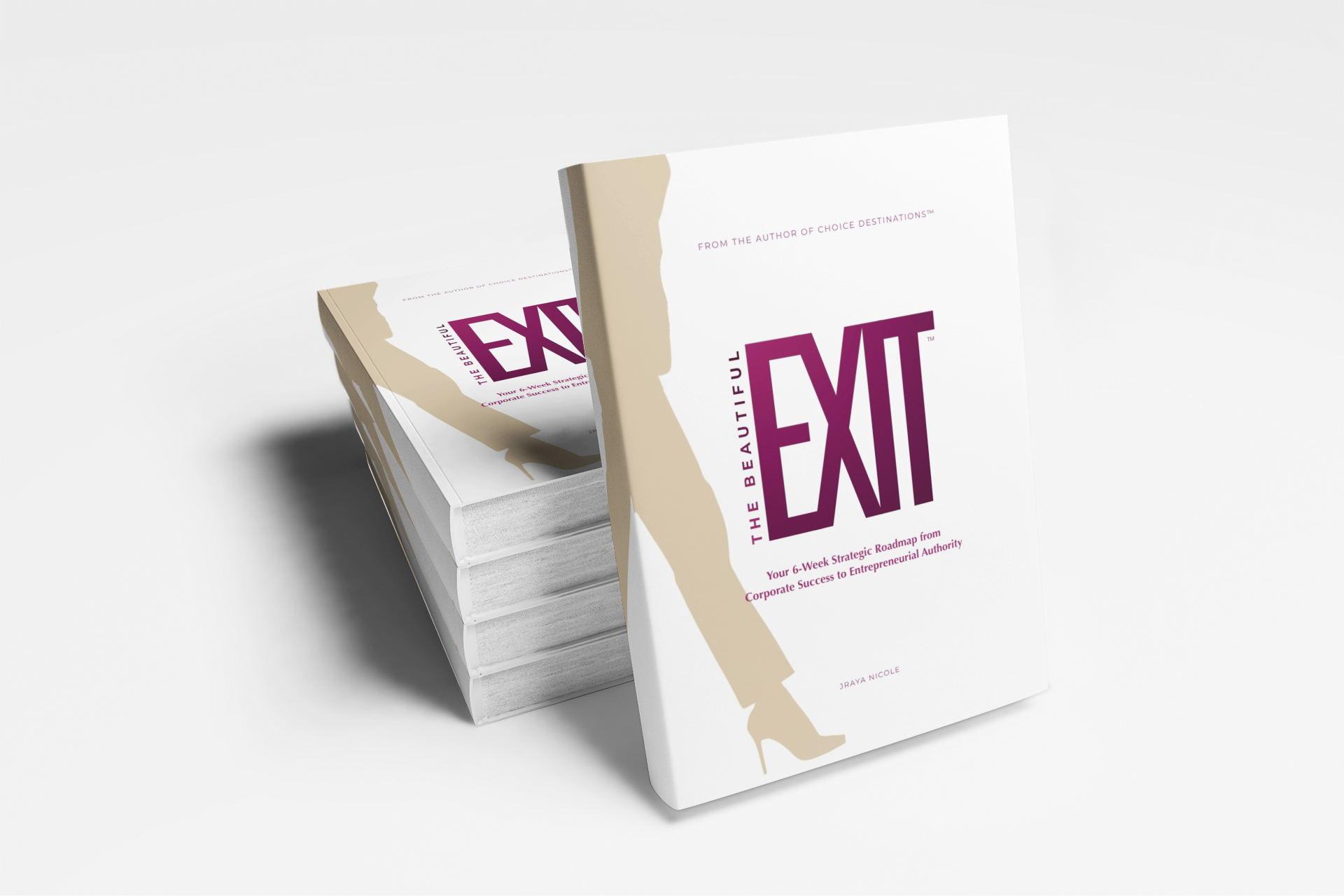
📌The Beautiful Exit™ Workbook launches Black Friday, November 29.
Week 4 walks you through exactly this: building your exit plan with clarity on relationships, reputation, and runway. With templates for your transition conversations, your positioning strategy, and your financial peace plan.
Pre-order now and get free access to the complete walk-through video course—so you're not just reading the framework, you're implementing it in real time.
Your transition doesn't have to be chaotic. It can be strategic… and beautiful.
Pre- Order Today - Get Your Bonus The Beautiful Exit™ Bundle
Next week at The Table: Financial Runway—how to create peace through preparation.
Because the best exits aren't driven by desperation. They're funded by strategy.
This is our inner circle. You're seeing how strategic exits actually get built—before anyone else does.
— Jraya
Making your next move your best move